
Transitions: reducing anxiety and supporting behaviour
15 October 2026: 9.30 am – 12.30 pm
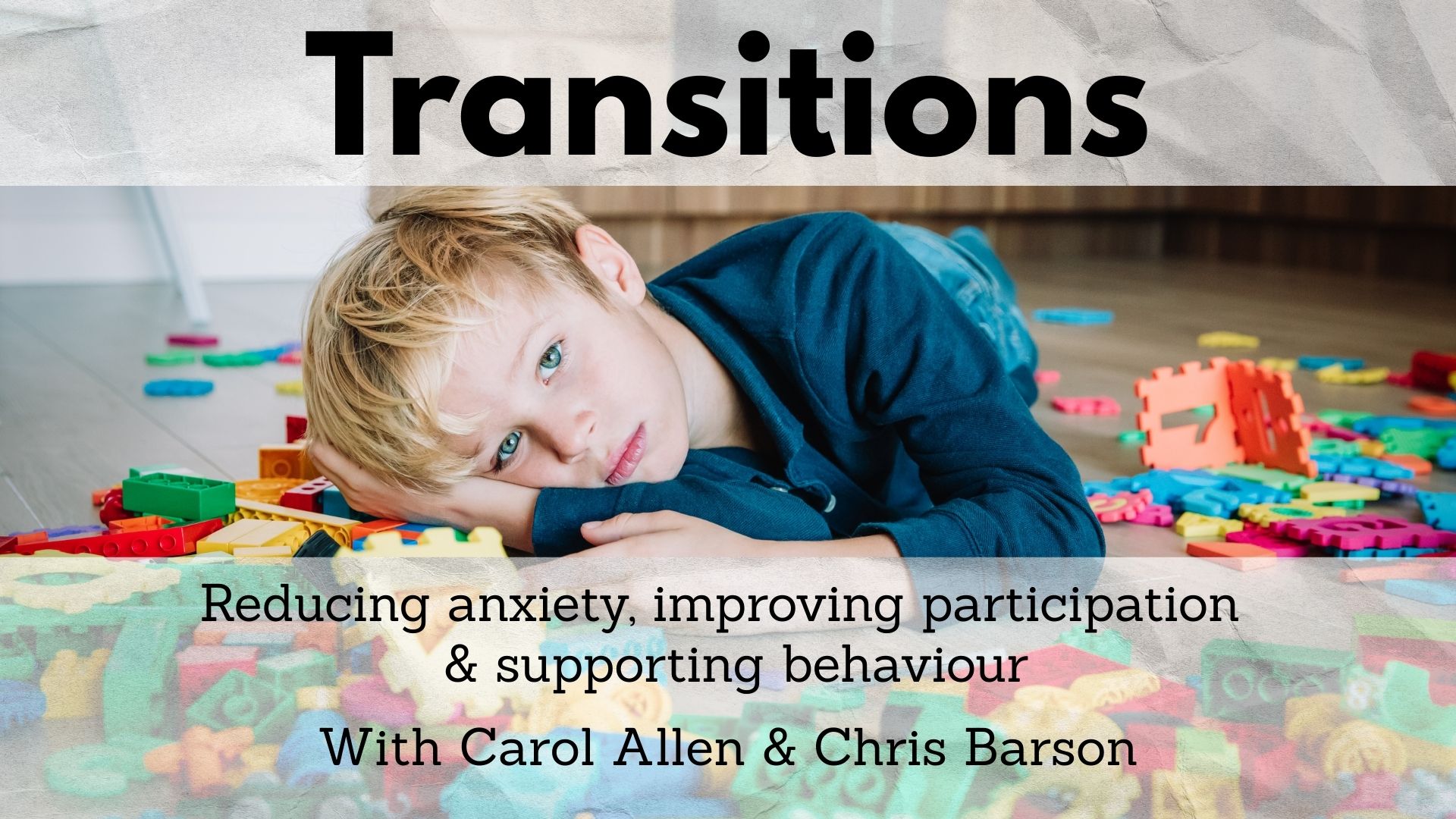
Transitions can be one of the biggest pressure points in the day for autistic or neurodiverse learners. When transitions go wrong, learning and behaviour often go with them. This session looks at what we mean by transition, why it can feel so difficult, and how we reduce the boiling points that lead to refusal, distress, or escalation.
Carol and Chris will share practical approaches to activity-to-activity and place-to-place transitions, with a strong focus on sensory cueing, clear start/end signals, and simple tools such as visuals and timers.
A collaborative activity to plan for commonplace scenarios will create a bank of ideas, strategies and resources you can use straight away.
We finish by considering how the same principles discussed during the morning can also support longer-term preparation for future transitions and life skills.
Session 1: Introduction to Transitions
In this first session, Carol asks:
What do we mean by transition?
How can problems with transitions impact learning and behaviour?
How can we minimise flash points in our teaching day?
Session 2: How long for? Who with? What next?
Chris continues by exploring:
Why do autistic learners have problems with transition?
The flexible thinking difficulties in autism
Problems with predicting
The need for ‘sameness’
Session 3: Activity-to-Activity Transitions
In this session, Carol and Chris will cover:
The importance of sensory cueing
The need for a clear start/end of activities – with sensory communication
Strategies to manage transition in continuous provision
Using visual aids, timers, and other supportive tools
Session 3: Breakout Room – discussion & collaborative activity
Session 4: Place-to-Place Transitions
Chris now moves on to:
Strategies for home-to-school and school-to-home transitions
Movement around school, including assemblies, community events, corridors, and the dining hall.
Breaktime and outside areas
Session 5: Preparing for Future Transitions
Our final session will briefly consider how many of the strategies and ideas shared this morning can also be deployed to support long-term planning and life skills development, and will highlight the need to start early with transition preparation.
9.30 am Admissions and a virtual tea/coffee to start the session!
9.35 am Welcome – and a warm up!
9.45 am Session 1: Introduction to Transitions
In this first session, Carol asks:
What do we mean by transition?
How can problems with transitions impact learning and behaviour?
How can we minimise flash points in our teaching day?
10.00 am Session 2: How long for? Who with? What next?
Chris continues by exploring:
Why do autistic learners have problems with transition?
The flexible thinking difficulties in autism
Problems with predicting
The need for ‘sameness’
10.30 am Session 3: Activity-to-Activity Transitions
In this session, Carol and Chris will cover:
The importance of sensory cueing
The need for a clear start/end of activities – with sensory communication
Strategies to manage transition in continuous provision
Using visual aids, timers, and other supportive tools
11 am COFFEE
11.15 am Session 3: Breakout Room – discussion & collaborative activity
11.30 am Session 4: Place-to-Place Transitions
Chris now moves on to:
Strategies for home-to-school and school-to-home transitions
Movement around school, including assemblies, community events, corridors, and the dining hall.
Breaktime and outside areas
12 pm Session 5: Preparing for Future Transitions
Our final session will briefly consider how many of the strategies and ideas shared this morning can also be deployed to support long-term planning and life skills development, and will highlight the need to start early with transition preparation.
12.20 pm Q & A
12.30 pm Thank you and goodbye!
This course will be appropriate for classroom practitioners from special schools and colleges, mainstream settings with specialist SEN provision and early years settings, and working with pupils with severe/complex learning needs and autism, or both.
Find more about Chris Barson!
Find more about Carol Allen!
The cost is £165 plus VAT per delegate. You can select multiple places on the booking form.
You can pay by credit card for this booking or request an invoice on the booking form.
The recording of this event will be in your account at online.hirstwood.com. You will access this using the email address on the booking form and your password (instructions for creating your password are in the joining information).
Here you will find:
a digital recording of the event
a transcript of the Zoom chat
These will be available for 10 days after the event.
NEW for 2026!
We will suggest practical reflective practice for this event to support you in implementing your key takeaways from this session in the classroom.
We’ll also offer a toolkit of additional resources to help, which may include further documentation, videos or links to valuable resources/websites.
Please join our Facebook Group, Sensory Support Spaghetti, to connect with us and other like-minded professionals – for everything sensory!