
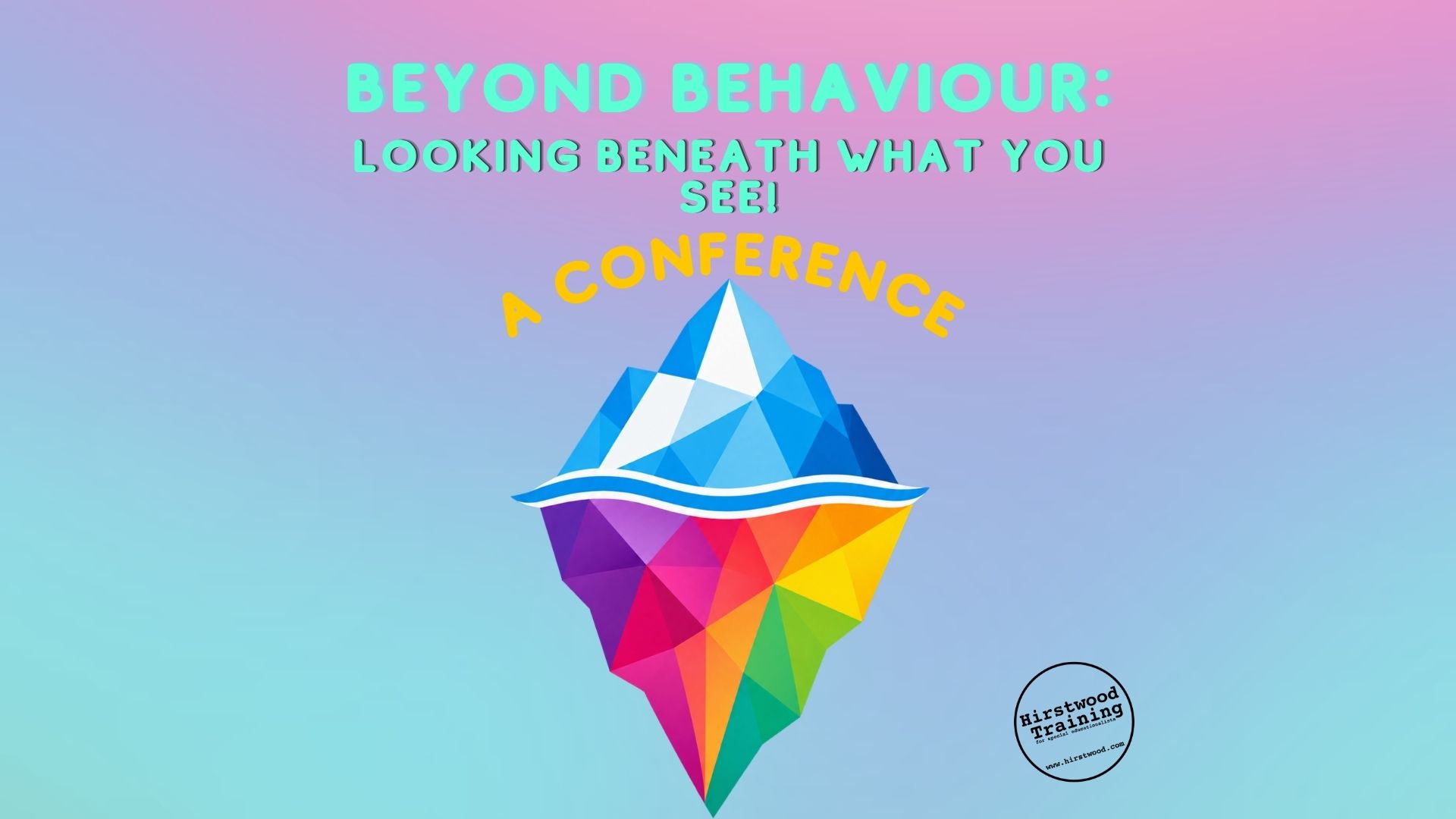
Beyond behaviour: looking beneath what you see
28 January 2027: 9 am – 3 pm online
with Clive Smith, Chris Barson, Carol Allen and Matt Laurie.
This practical one-day conference brings together Clive Smith, Chris Barson, Carol Allen, and Matt Laurie to explore our key theme. Before we decide how to respond to behaviour, we need to understand what might be causing it.
We will consider the many factors that influence behaviour in learners with complex and neurodiverse learning needs. How do sensory processing differences affect behaviour? What causes a learner to become distressed, anxious or overwhelmed? How can we prevent situations from escalating, respond more effectively when they do, and support our own well-being along the way? Behaviour is communication, but understanding what learners are telling us isn’t always straightforward.
With practical strategies and ideas you can use straight away, these sessions will help you reduce barriers to learning, support positive behaviour approaches and create calmer, more successful classrooms for everyone.
Clive Smith: Too Much, Too Little: What Are Our Learners Telling Us?
Our learners are constantly telling us something, but not always through words. What they seek, what they avoid, what captures their attention and what they seem not to notice can all give us valuable clues about how they experience the world around them.
When behaviour is difficult to understand, could it be telling us something about a learner’s sensory needs?
This session explores how sensory processing influences behaviour, engagement and learning. Clive considers before asking how we can change a learner’s behaviour; perhaps we should first ask what that behaviour is telling us so we can respond more effectively.
Chris Barson: Keep Calm and Send the Right Signals!
When dealing with behaviour incidents, non-verbal cues and active communication dictate whether a situation escalates or de-escalates. How do we signal safety and prevent students from feeling cornered or defensive?
Clear, calm, and neutral communication keeps emotions in check, avoiding power struggles and confusion during high-stress moments. When learners feel heard, their fight-or-flight response subsides, opening the door to rational problem-solving.
In this session, Chris explores:
Co-regulation meets self-regulation!
What are the key characteristics of the low-arousal practitioner?
What does my learner actually NEED? Getting the support style right
Keep your head when all about you are losing theirs (and blaming it on you)
Safe Culture = Safe Practice
Carol Allen: Understanding Anxiety – Breaking Down Barriers to Learning
An anxious learner is often a learner who is not ready or able to engage effectively in learning. Anxiety can present in many different ways, sometimes through behaviours that are difficult to understand or which mask the underlying causes.
For some learners, anxiety is not simply an emotional response. Sensory processing differences, physical discomfort and physiological responses can all contribute to anxiety and create significant barriers to learning.
In this session, Carol will explore how we can better recognise and understand anxiety, identify its possible causes and develop practical approaches that help learners feel safe, supported and ready to engage.
Matt Laurie: Supporting Your Well-being – Practical Strategies for the Classroom
Supporting learners with complex needs can be rewarding, but the daily pressures of classroom life can also be stressful and exhausting.
But how often do we stop to consider our own mental well-being needs, as well as those of the learners we support?
Matt will introduce two approaches, Compassionate Communication and Self-Determination Theory, to help you look after your own well-being in the classroom, and show how small changes can make a real difference.
We will look at how our observations, assumptions, and judgements shape our responses to challenging situations, and why understanding this is key to creating a more positive and supportive classroom for everyone.
9 am Admissions and a virtual tea or coffee to start the day!
9.05 am Welcome, introductions and a warm-up activity.
9.15 am Session 1: Clive Smith: Too Much, Too Little: What Are Our Learners Telling Us?
10.10 am Session 2: Chris Barson: Keep Calm and Send the Right Signals!
11.00 am Coffee
11.30 am Session 3: Carol Allen: Understanding Anxiety: Breaking Down Barriers to Learning
12.15 pm Lunch
1.00 pm Session 4: Matt Laurie: Supporting Your Well-being: Practical Strategies for the Classroom
1.45 pm Session 5: Break out Room Activity: reflecting on the key messages from the day and how these can be implemented in your setting
2.00 pm Session 6: TBC
2.50 pm Q & A
3 pm Thank you and close of the day
Click on the names below to read more about our conference presenters!
This conference will be appropriate for classroom practitioners from special schools and colleges, mainstream settings with specialist SEN provision and early years settings, working with pupils with severe complex or neurodiverse learning needs.
The recording of this event will be in your account at online.hirstwood.com. You will access this using the email address on the booking form and your password (instructions for creating your password are in the joining information).
Here you will find:
a digital recording of the event
a transcript of the Zoom chat
These will be available for 10 days after the event.
Tickets cost £295 plus VAT per delegate.
You can select multiple places on the booking form.
You can pay by credit card for this booking or request an invoice on the booking form.
Tickets: £295 plus VAT per delegate