
Getting Started with Self-Regulation

25 June 2026: 9.30 am – 12.30 pm
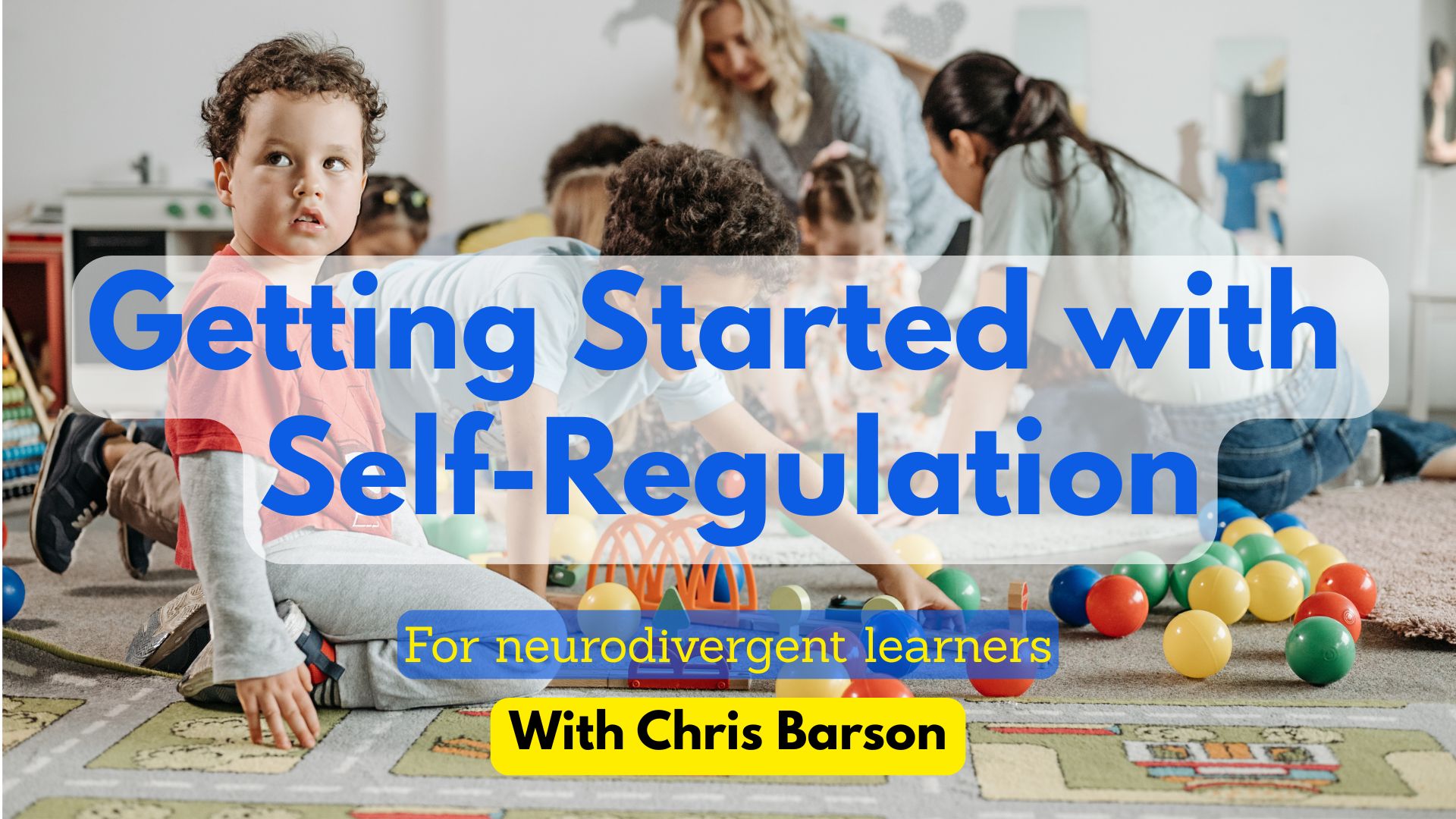
Chris Barson explores what developing self-regulation for neurodivergent learners, including those with ADHD, autism and dyslexia, looks like.
You’ll look at what self-regulation really means (not just “behaviour”), why it can be hard work, and what happens when learners become overloaded, including meltdown, shutdown, burnout or inertia. Chris will explain the key skills that underpin self-regulation and how stress, demand, and sensory load affect a learner’s ability to cope in school.
You’ll leave with clear, classroom-friendly strategies such as low-arousal approaches, sensory supports, and co-regulation, using the 4 Ds (Distract, Dilute, Develop, Discover) to guide your responses. The session also includes a breakout activity to create practical resources to use back in your setting, plus a round-up of helpful tools and a Q&A.
Session 1: What is self-regulation?
This session explains self-regulation as the way we manage energy, emotions, attention, and sensory input to cope with what’s expected of us — it’s not just about behaviour. Chris will show what regulation can look like in neurodivergent learners and why it’s often misunderstood as “won’t” when it’s really “can’t right now”. He’ll also share an easy way to explain self-regulation to colleagues using everyday classroom examples.
Session 2: Developing the underpinning skills
Chris looks at the key “thinking skills” that support self-regulation, such as planning, stopping and thinking, working memory, self-checking and flexible thinking. He shows what these look like in everyday classroom tasks and why difficulties with them can quickly lead to stress. When demands are too high, regulation drops, and you may see shutdown, meltdown, avoidance, or agitation. Chris will share practical ways to reduce stress and build coping, including low-arousal approaches and sensory strategies that help learners stay regulated or reduce overload when things start to tip.
Session 3: Co-regulation
This session looks at how adults can help learners regulate in the moment, before expecting them to do it independently. Chris will explore early signs of stress in learners and in staff, because stressed adults can (without meaning to) make things harder. The session ends with the 4 Ds (Distract, Dilute, Develop, Discover) — a simple tool to help you decide what to do next.
Session 4: Breakout Room
Delegates will work in small groups on one theme (sensory regulation, emotions, problem solving, self-advocacy, mindfulness/cognitive strategies, or a calm kit). You’ll create a simple activity or mini-plan that builds self-regulation skills without overwhelming learners. Each group will share their ideas so everyone leaves with something practical to adapt for their own setting.
Session 5: Self-regulation tools and resources
In this final session, Chris shares useful low-tech and high-tech tools, focusing on choosing tools that fit the learner’s needs rather than a “one-size-fits-all” approach. He’ll cover how to introduce tools in a supportive way (not as rewards or punishments), how to avoid over-reliance, and how to build simple routines so supports are in place before things escalate. You’ll leave with a short list of practical options to try straight away.
9.30 am Admissions and a virtual tea/coffee to start the session!
9.35 am Welcome – and a warm up!
9.45 am Session 1: What is self-regulation?
This session explains self-regulation as the way we manage energy, emotions, attention, and sensory input to cope with what’s expected of us — it’s not just about behaviour. Chris will show what regulation can look like in neurodivergent learners and why it’s often misunderstood as “won’t” when it’s really “can’t right now”. He’ll also share an easy way to explain self-regulation to colleagues using everyday classroom examples.
10.15 am Session 2: Developing the underpinning skills
Chris looks at the key “thinking skills” that support self-regulation, such as planning, stopping and thinking, working memory, self-checking and flexible thinking. He shows what these look like in everyday classroom tasks and why difficulties with them can quickly lead to stress. When demands are too high, regulation drops, and you may see shutdown, meltdown, avoidance, or agitation. Chris will share practical ways to reduce stress and build coping, including low-arousal approaches and sensory strategies that help learners stay regulated or reduce overload when things start to tip.
11.00 am COFFEE
11.15 am Session 3: Co-regulation
This session looks at how adults can help learners regulate in the moment, before expecting them to do it independently. Chris will explore early signs of stress in learners and in staff, because stressed adults can (without meaning to) make things harder. The session ends with the 4 Ds (Distract, Dilute, Develop, Discover) — a simple tool to help you decide what to do next.
11.45 am Session 4: Breakout room activity
Delegates will work in small groups on one theme (sensory regulation, emotions, problem solving, self-advocacy, mindfulness/cognitive strategies, or a calm kit). You’ll create a simple activity or mini-plan that builds self-regulation skills without overwhelming learners. Each group will share their ideas so everyone leaves with something practical to adapt for their own setting.
12.00 pm Session 5: Self-regulation tools and resources
In this final session, Chris shares useful low-tech and high-tech tools, focusing on choosing tools that fit the learner’s needs rather than a “one-size-fits-all” approach. He’ll cover how to introduce tools in a supportive way (not as rewards or punishments), how to avoid over-reliance, and how to build simple routines so supports are in place before things escalate. You’ll leave with a short list of practical options to try straight away.
12.20 pm Q & A
12.30 pm Thank you and goodbye!
This course will be appropriate for classroom practitioners from special schools and colleges, mainstream settings with specialist SEN provision and early years settings, and working with pupils with severe/complex learning needs and autism, or both.
Find more about Chris Barson!
The cost is £149 plus VAT per delegate. You can select multiple places on the booking form.
You can pay by credit card for this booking or request an invoice on the booking form.
The recording of this event will be in your account at online.hirstwood.com. You will access this using the email address on the booking form and your password (instructions for creating your password are in the joining information).
Here you will find:
a digital recording of the event
a transcript of the Zoom chat
These will be available for 10 days after the event.
NEW for 2026!
We will suggest practical reflective practice for this event to support you in implementing your key takeaways from this session in the classroom.
We’ll also offer a toolkit of additional resources to help, which may include further documentation, videos or links to valuable resources/websites.
Please join our Facebook Group, Sensory Support Spaghetti, to connect with us and other like-minded professionals – for everything sensory!